Maintenance & Prevention
Cleaning a Wolf Oven Without Damaging It — Including the Blue Interior
Warm water, a mild detergent and a soft cloth handle almost everything in a Wolf cavity, and the self-clean cycle handles the rest. Do not spray caustic oven cleaners such as Easy-Off inside a Wolf cavity: they attack the porcelain finish and the seals, and the manufacturer's own guidance is to use the self-clean cycle instead. Never spray anything at the cavity sensor, the fan opening, the door gasket or the lamp.
The full guide
The direct answer about caustic cleaners
Do not spray Easy-Off or any caustic oven cleaner inside this cavity. It is one harvested question on its own and it deserves a plain answer rather than a hedge.
Those products work by chemically attacking baked-on carbon, and they do not distinguish between carbon and the porcelain finish, the door gasket, the trim or the aluminum around the fan opening. The damage is permanent, it is visible, and it is not covered by anything.
The appliance has a self-clean cycle for precisely this job. Use it.
Everyday, which is most of it
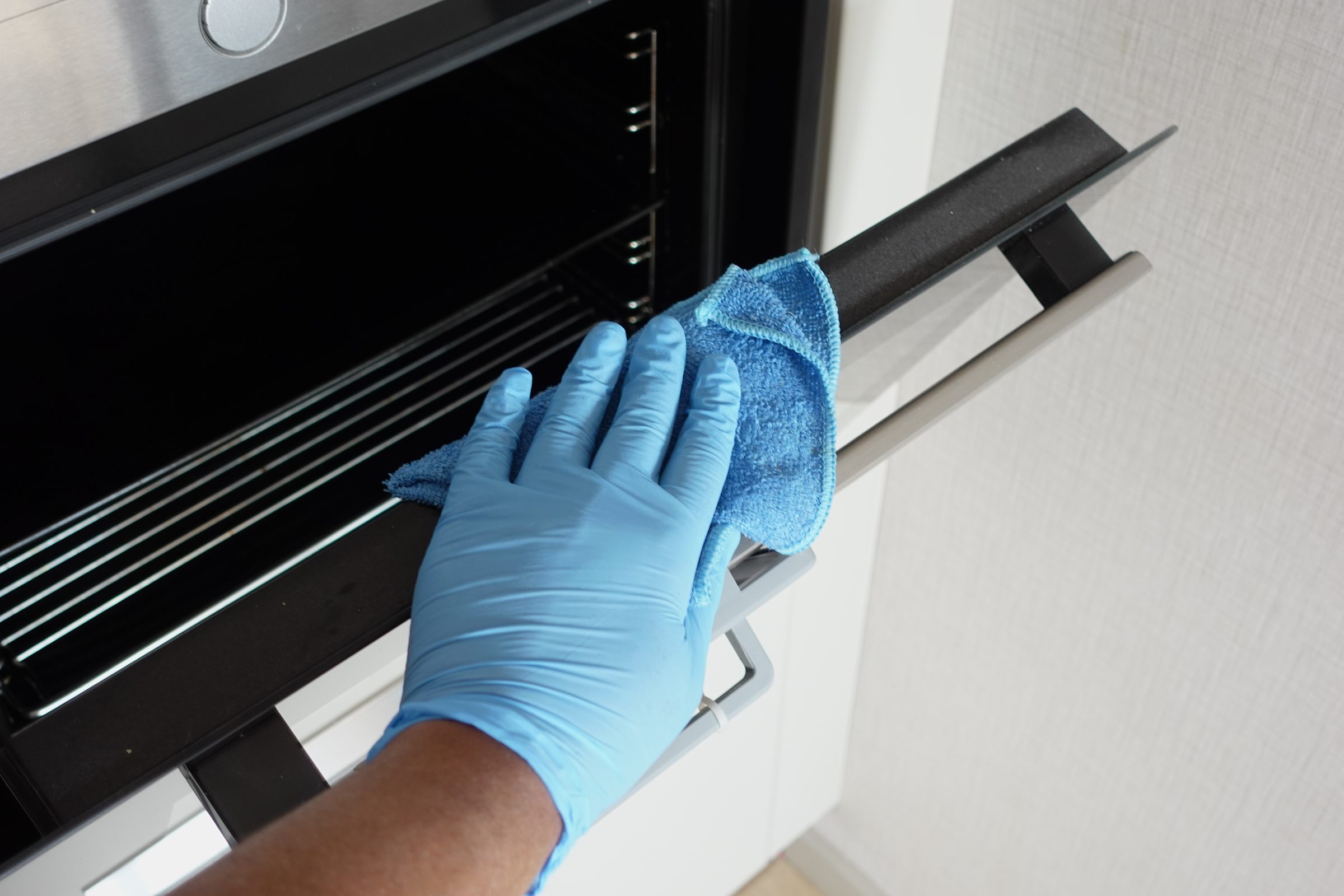
Warm water, a mild detergent, a soft cloth, while the cavity is still slightly warm. Spills that are dealt with the same evening never become the problem this page is about.
The four places that must never see a cleaner
- The cavity temperature sensor — the small probe on the back wall. Spraying it changes what it reads, and an oven that is measuring wrongly is a repair.
- The convection fan opening. Liquid goes past it into places it does not come back from.
- The door gasket. Cleaners harden it, and a hardened gasket is heat leaving the cavity.
- The lamp and its holder. Cool, dry and left alone.
Racks, glass and stainless
Racks. A soak in a bath with a little detergent, not a dishwasher — chrome dulls. Check your manual for whether they are meant to stay in during self-clean; on most models they are not.
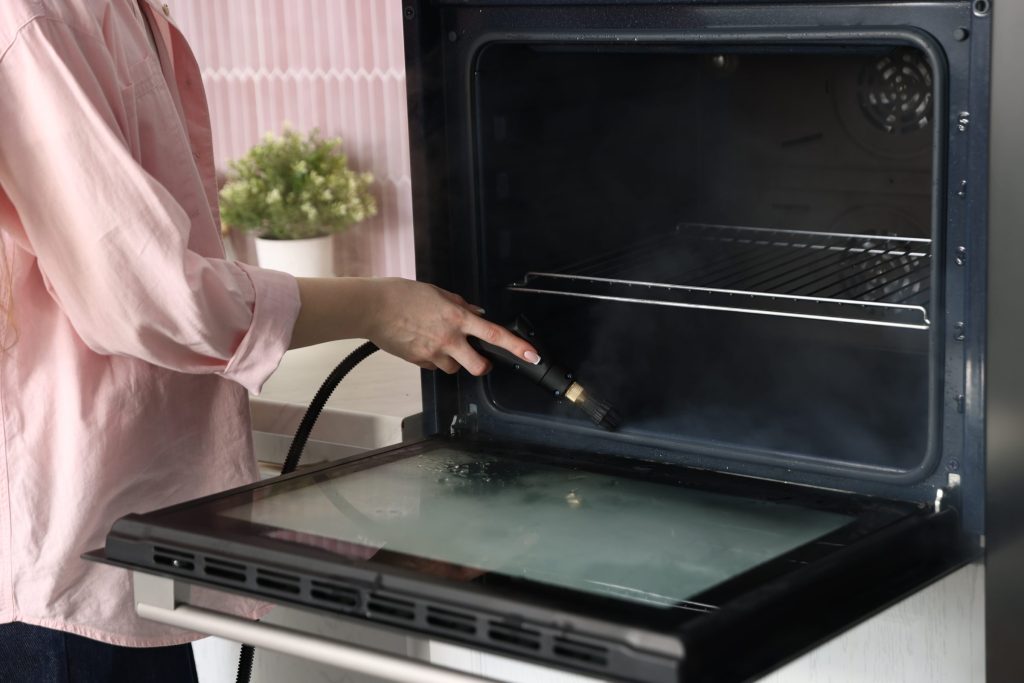
The door glass. Warm water and a soft cloth on the inside. Marks between the panels cannot be reached without taking the door apart, and that is a service job on a professional door.
The stainless. With the grain, then dried with a clean cloth. Never a scouring pad, never a wire brush, and less polish rather than more.
Grates and burner caps are a different page. They come off, and putting them back squarely is the single commonest cause of a burner that clicks and will not light.
When to use the self-clean cycle
For baked-on carbon that a cloth will not touch, and not much else. It is the hardest test the appliance ever runs — it holds the cavity far above any cooking temperature for hours — and it finds the weakest thing in there.
That is not a reason to avoid it. It is a reason not to run it the week before a holiday, and to deal with any existing temperature complaints first. What sometimes happens afterwards, and why.
When to call
If a cleaner has been used inside the cavity and something has changed since — the finish, the seal, or the way the oven holds temperature. And if the oven has not worked properly since a self-clean cycle, which is common enough to have a page of its own.
If it turns out to be a repair
What this leads to, and what it costs
Every job on this site is priced the same way: an on-site diagnostic first, the figure agreed in writing before anybody starts.
-
The cycle found it rather than caused it Oven dead after a self-clean cycle
The oven ran its cleaning cycle and has not worked since. It is common, you did nothing wrong by using the feature, and what failed was usually already marginal before the cycle started.
- Worked before the cycle, dead after it
- Door still locked, cavity cold
- A code about cavity temperature or rate of rise
-
from $155 Cooking equipment maintenance
A scheduled visit for equipment that is working. Burners and igniters, door seals, hood filters and damper, steam oven descaling, fans and vents — the things that are cheap now and expensive later.
- Descaling before a boiler needs replacing
- Seals and hinges set before a door drops
- Fans, vents and clearances actually checked
-
M Series · E Series · L Series · Convection steam · Warming drawer Built-in ovens & steam ovens
Built-in ovens, single and double, the convection steam oven — a different machine with a boiler, a tank and a vent valve in it — and the warming drawer that sits under or beside them. Between them they account for more than half of every error code this brand publishes, and the codes are decoded on this site rather than left as characters on a display.
- The door still locked after a self-clean
- Temperature drifting, or never arriving
- A steam oven asking to be descaled
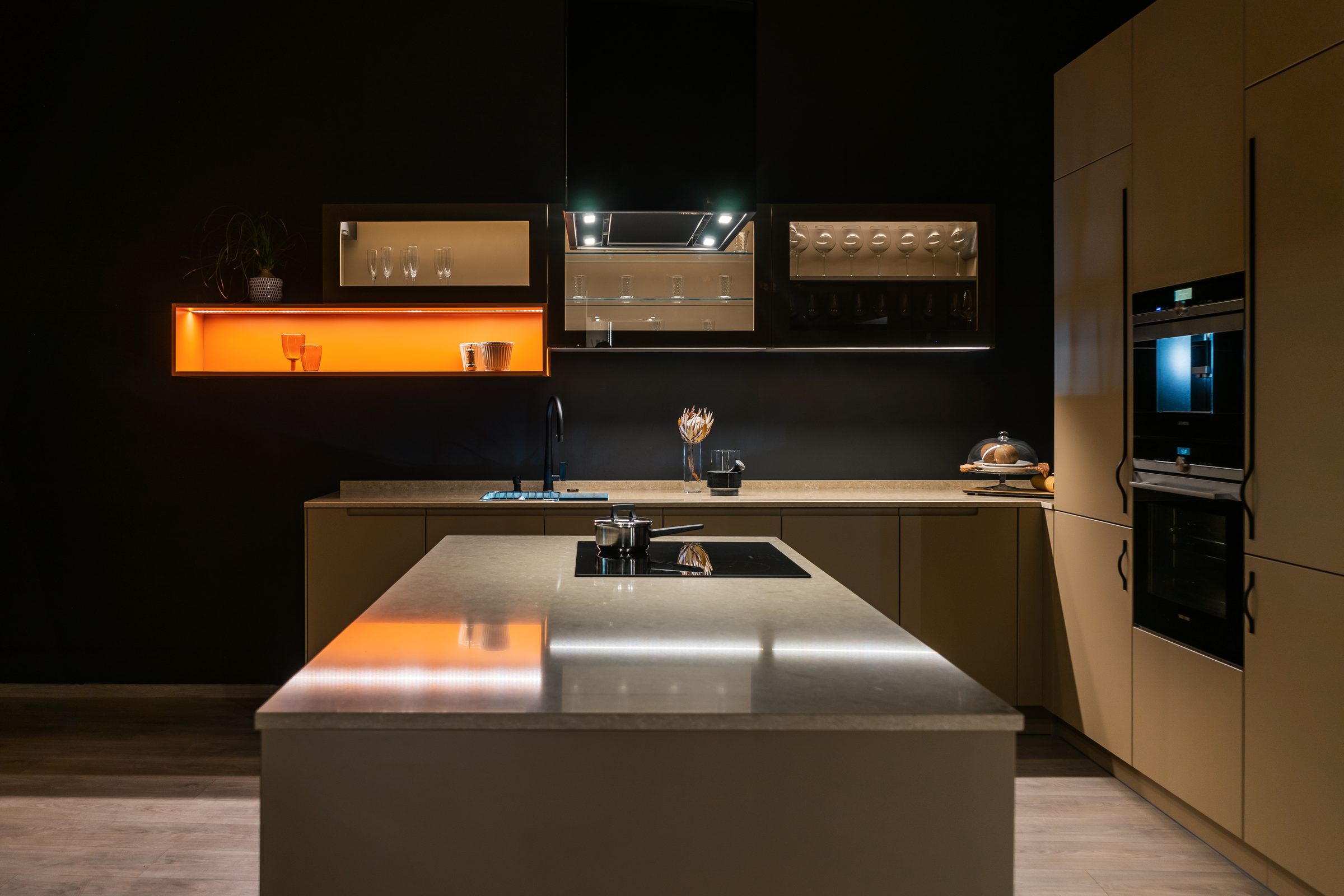
Questions people ask about this
Can I use Easy-Off in a Wolf oven?
No, and this is the one place on the page where we are blunt. Caustic oven cleaners attack the porcelain finish, the seals and the trim, and the damage is permanent and visible. The cavity has a self-clean cycle for exactly this reason.
What about the blue porcelain interior?
It is a finish, and it is tough at temperature and not tough against caustics. Warm water and detergent for spills, the self-clean cycle for anything baked on, and nothing abrasive at any point.
Can the racks go in the dishwasher?
Chrome racks come out badly — they dull. Soak them in a bath with a little detergent instead. Check the manual for whether yours are meant to stay in during self-clean; most are not.
How do I clean between the door glass?
You do not, without taking the door apart, and that is a service job on a professional door. Marks that appear between the panels are a sign the door has been apart before or has taken a knock.
The stainless front has streaks.
Wipe with the grain, then dry with a clean cloth. Most streaks are the polish rather than the steel, and less product usually fixes it.
Maintenance & Prevention
More guides like this one
-
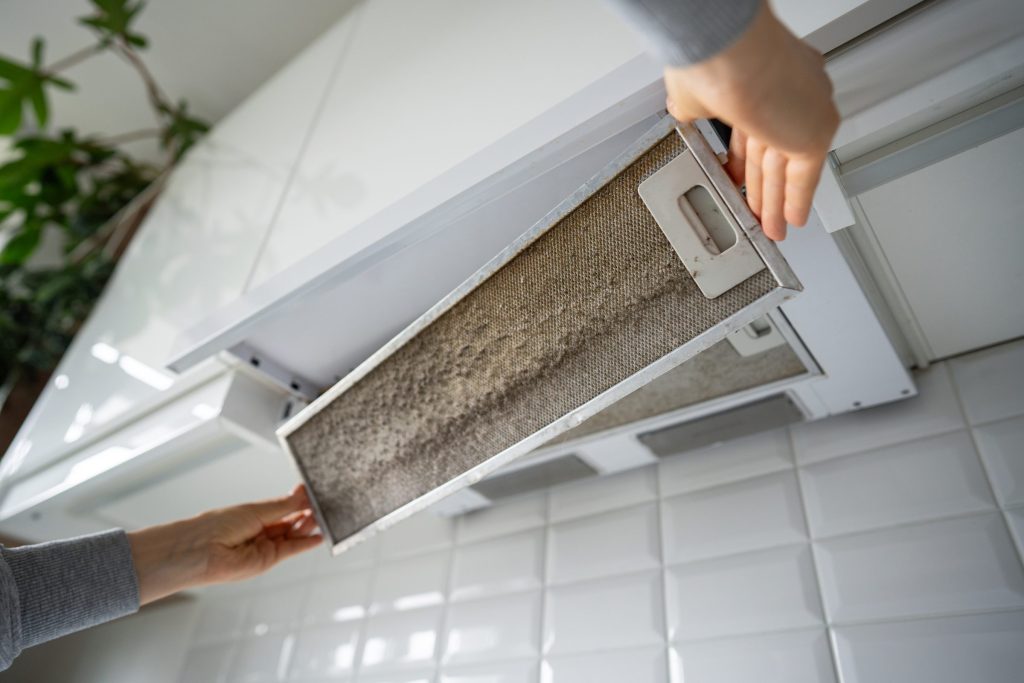
Replacing the Light in a Wolf Range Hood — And Why All of Them Going Together Is Different
A genuine do-it-yourself page. One lamp out is a lamp; all of them out at once is the driver behind them, and knowing which before you buy anything saves a wasted trip.
Read more -
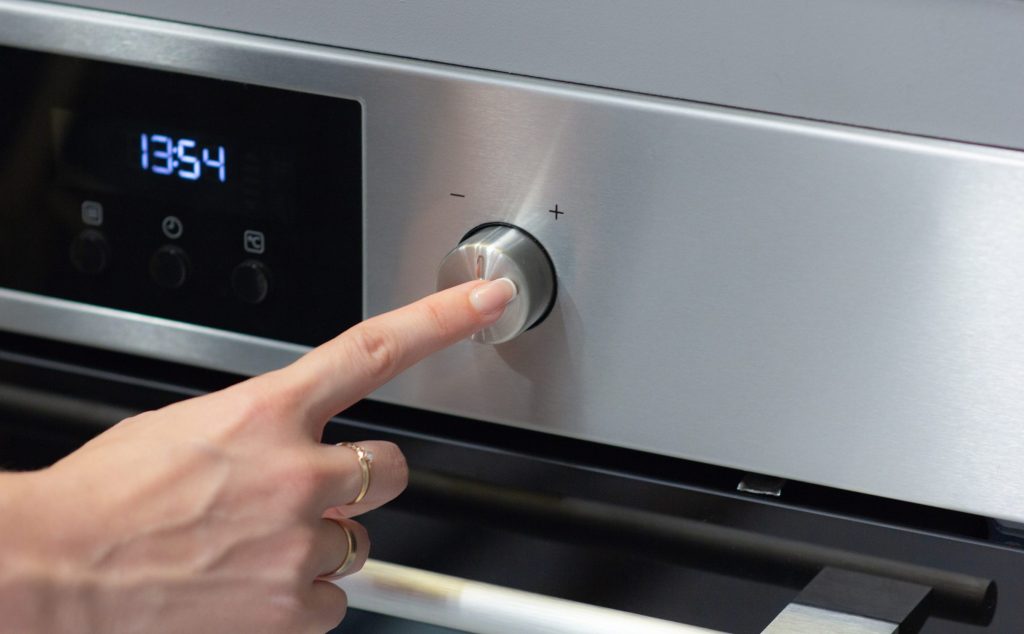
How Long a Wolf Self-Clean Cycle Takes — and When Not to Start One
The duration, the cool-down nobody counts, the racks that come out — and the honest warning that this is the hardest test the appliance ever runs.
Read more -
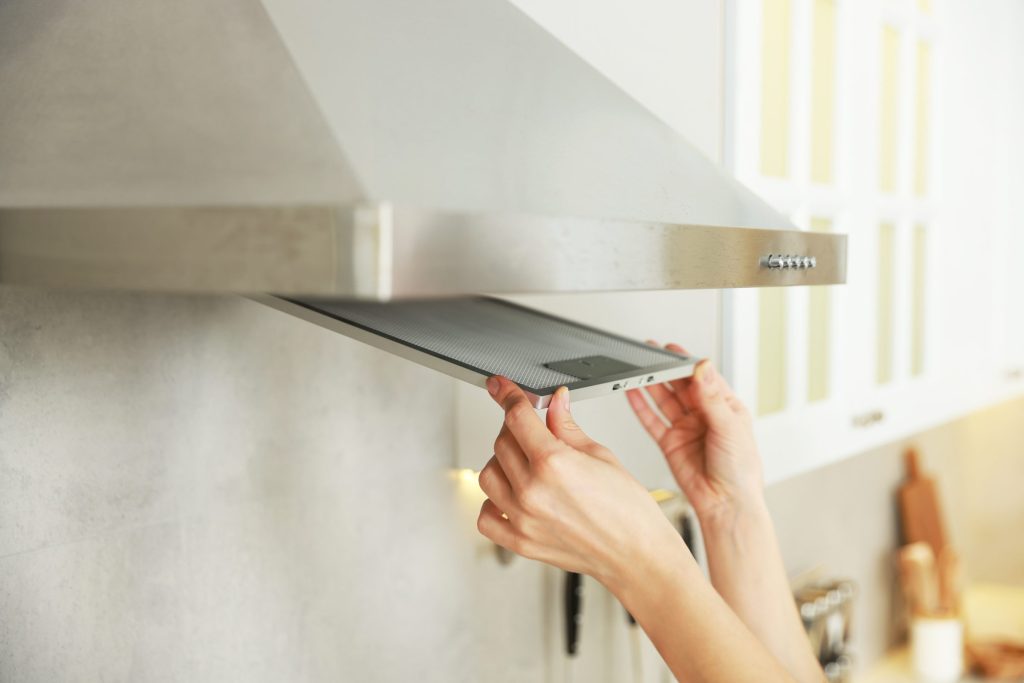
Cleaning Wolf Hood Baffle Filters — Ten Minutes That Fix Most Hood Complaints
They go in the dishwasher. That is the page — and everything else is why a hood pulling through greased filters sounds exactly like a motor on its way out.
Read more
Tell us the model number and what it is doing.
This article is based on:
- Official manufacturer documentation
- Internal repair procedures
- Technician repair history
- Company quality standards