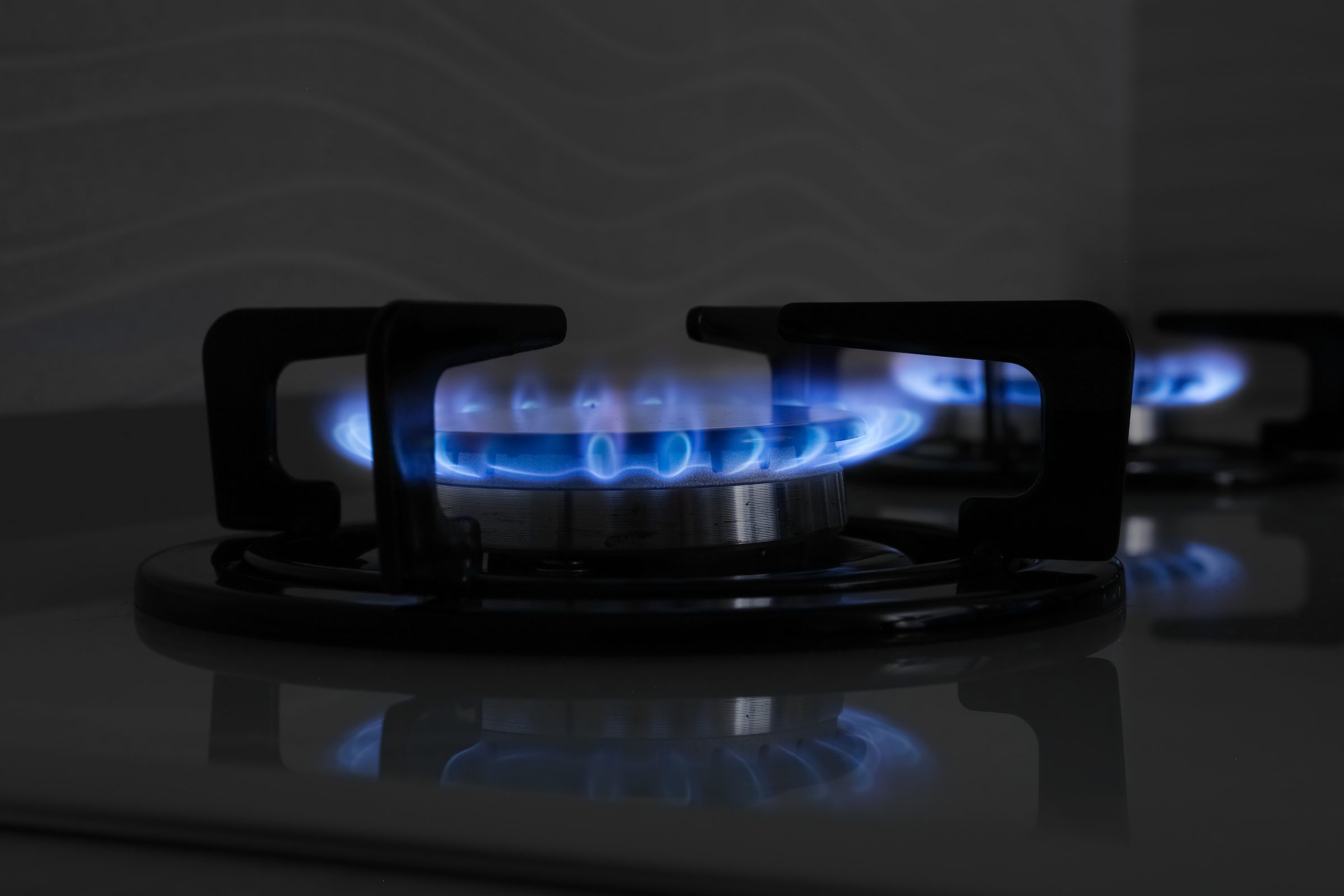
- “Flame goes out at the lowest setting”
- “Nothing between "off" and "too hot"”
- “A simmer that used to work and does not”
Symptom
Wolf burner will not simmer
The burner works, but it will not hold a genuine low flame — it either goes out at the bottom of the dial or sits too high to melt chocolate. On professional equipment this is a specification rather than a preference.
- From $95 diagnostic, credited to the repair
- 59 cities and neighborhoods covered
- OEM parts available on order
- In writing the price, before anything is opened
Five ordinary causes
What this usually turns out to be
Cheapest and commonest first, which is also the order we check them in. They sit hundreds of dollars apart, and only the unit settles which one is yours.
-
Partially blocked ports
The low flame needs every port to carry its share. Blocking that is invisible at full output kills a simmer.
Gas burner & igniter repair from $165 -
The valve adjustment
Each burner valve has a low-flame setting. It is adjustable, it drifts, and it is set with a flame in front of you rather than by numbers.
Gas burner & igniter repair from $165 -
Wrong orifices after a fuel conversion
A range set up for the wrong gas is closest to correct at full output and worst at simmer, which is why this is the symptom that finds it.
Appliance installation from $225 -
Gas pressure at the appliance
Low pressure loses the low end first. It is the house rather than the range, and it is measurable.
-
A cap seated wrong
Same first suspect as everything else on a burner, and same free fix.
In five minutes
Before you call anybody
None of it needs tools, and all of it makes the visit shorter.
-
01
Look at the ring at the lowest setting
Even and continuous, or broken and patchy. Patchy is ports.
-
02
Try every burner
One burner is that burner. All of them is pressure or a conversion.
-
03
Flame color at full
Yellow anywhere points at a conversion or a mixture problem, which explains the simmer too.
-
04
When it changed
After a clean, after a move, after a gas supply change. Each points somewhere different.
How it shows up
What people describe when they call
A shortcut
Narrow it down before anybody arrives
A description of the behaviour leaves a few possible causes. A code names the subsystem before anybody opens anything, which is why it is worth photographing before it clears.
If there is no code at all
The data plate is inside the cabinet, upper left wall or behind the grille. All models
In more detail
About Wolf burner will not simmer
The fastest diagnosis is the code
Check the cap seating and the port ring first, exactly as for a burner that will not light. A partially blocked ring loses the low end long before it affects the high end, which is why simmer goes first.
Why this is a page rather than a footnote
People buy this equipment for the low end as much as the high end. A burner that will not hold a low flame is not a minor complaint on a professional range — it is the feature that was paid for, and it is usually fixable in an ordinary service visit.
The low end fails first
That is the useful principle here. Ports partially blocked, pressure slightly low, orifices slightly wrong — none of them show at full output and all of them show at simmer. So a simmer complaint is often the earliest possible warning of something worth catching.
This article is based on:
- Official manufacturer documentation
- Internal repair procedures
- Technician repair history
- Company quality standards
Before you book
Questions about wolf burner will not simmer
Is simmer adjustable?
Yes. Each burner valve has a low-flame adjustment, and setting it is a real part of a service visit on this equipment. It is done with a flame in front of you, burner by burner, rather than to a specification on paper.
It has never simmered properly since it was installed.
Then look at the fuel conversion before anything else. A range fitted with the orifices for the wrong gas behaves almost normally at full output and badly at the low end, and it has been that way since day one rather than failing.
Does the pan matter?
More than people expect. A thin pan over a genuine low flame still scorches, and a heavy pan over an indifferent one is forgiving. It is worth ruling out before booking anybody.
Where we do it
Across Miami-Dade, Broward, and Palm Beach
Same terms everywhere we go: an on-site diagnostic first, the price agreed in writing, and the exact figure confirmed once we have seen the unit.
Neighborhoods people ask for by name