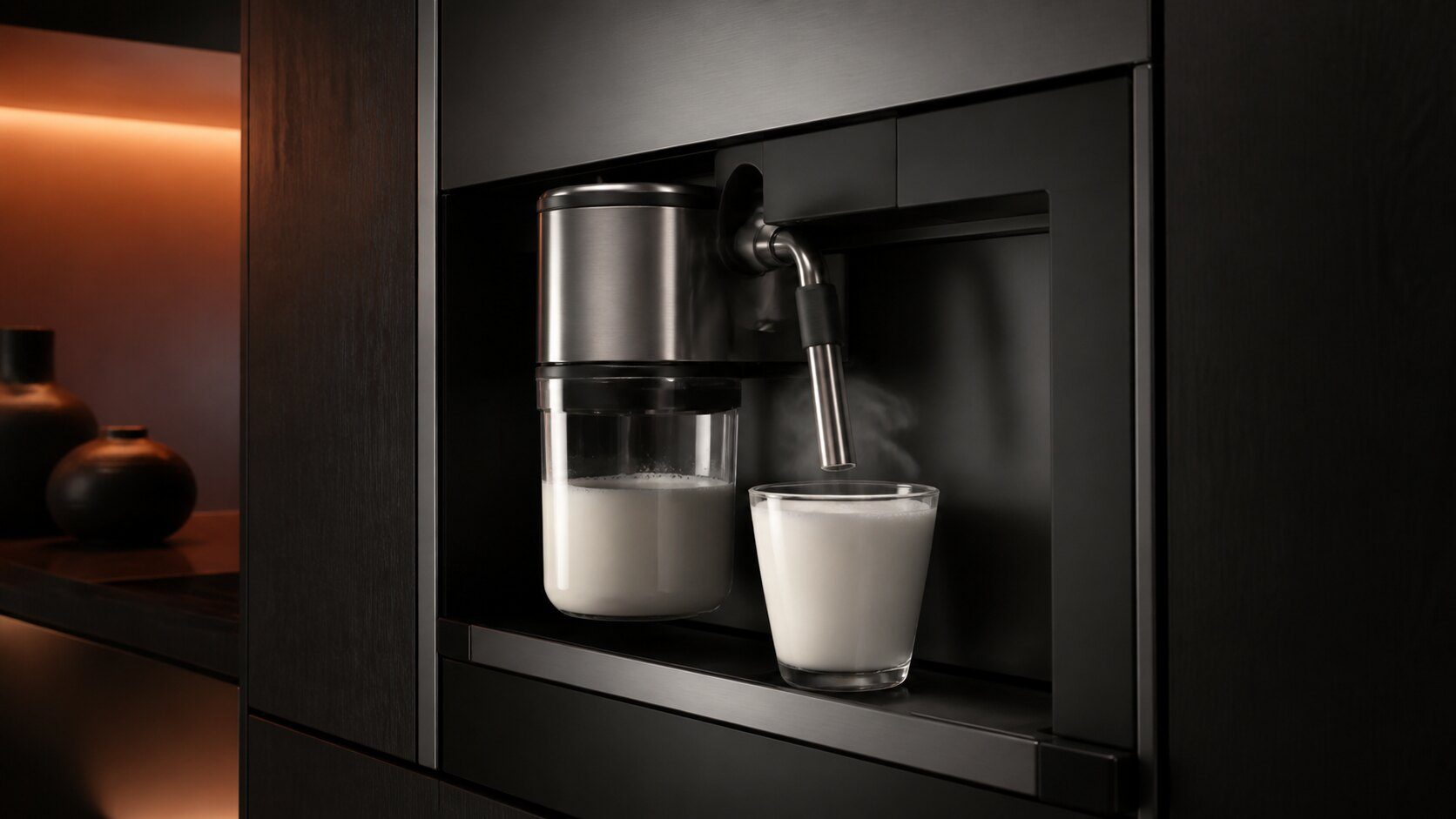
- “Warm milk and no foam”
- “A frother that spits”
- “Foam one day and none the next”
Symptom
Wolf milk not frothing
Flat milk instead of foam, a frother that spits and splutters, or a cappuccino that arrives as warm milk with coffee sitting on top. On a built-in system this is a cleaning problem far more often than a broken one.
- From $95 diagnostic, credited to the repair
- 59 cities and neighborhoods covered
- OEM parts available on order
- In writing the price, before anything is opened
Five ordinary causes
What this usually turns out to be
Cheapest and commonest first, which is also the order we check them in. They sit hundreds of dollars apart, and only the unit settles which one is yours.
-
Dried milk in the frother passages
The single most common cause. Milk left overnight in the tube sets like glue in exactly the narrow places that make the foam.
-
The carafe or the tube not seated
Air is drawn in at the joint instead of milk. It froths air, which is why it spits rather than foams.
-
A perished or split intake tube
A cheap part that hardens with heat and cleaning. A split too small to see stops the suction that makes foam.
Coffee system repair from $285 -
The milk itself
Cold whole milk foams best. Milk near its date, previously warmed, or very low in fat will not, on any machine.
-
Scale on the steam side
Less steam, less foam. Miami water does this faster than the descale reminder assumes, and it shows on milk before it shows on coffee.
Coffee system descaling & service from $195
In five minutes
Before you call anybody
None of it needs tools, and all of it makes the visit shorter.
-
01
The lid, in pieces
Every removable part of the carafe lid, apart and rinsed. This is where it hides.
-
02
A different carton
Cold, whole, freshly opened. It rules out the milk in one attempt.
-
03
The tube along its length
Stiff, cloudy or split at the ends. It costs little and it perishes.
-
04
Whether the steam is strong
Weak steam with a clean frother points at scale rather than at milk.
How it shows up
What people describe when they call
In more detail
About Wolf milk not frothing
The fastest diagnosis is the code
Run the machine's own milk cleaning cycle, then take the carafe lid apart and wash the small parts by hand. Dried milk in a passage a millimeter across is the cause in most of these, and no amount of setting change gets past it.
The one appliance on this site with a daily job
Everything else here is asked for maintenance once or twice a year. A coffee system with a milk carafe wants attention every day it is used, and the machines that arrive with this problem are almost always the ones where that stopped happening — a rinse skipped through a busy week, then a cleaning cycle postponed, and then milk set hard in a passage the width of a pin.
It is worth knowing because the repair and the prevention are the same act. If the cleaning cycle and a hand-washed lid bring the foam back, nothing was broken; and if they do not, the tube and the steam side are a short list to work through.
This article is based on:
- Official manufacturer documentation
- Internal repair procedures
- Technician repair history
- Company quality standards
Before you book
Questions about Wolf milk not frothing
Does plant milk work in it?
Oat foams well and is the reliable one; almond and rice are unpredictable on any automatic system, and soy sits in between. If foam matters more than the milk does, a barista-labeled version of whichever you drink is the honest answer.
Do I have to run the cleaning cycle every day?
Yes, and it is the whole maintenance story for this half of the machine. A rinse after each use and the full cycle daily is what keeps the passages open; skipping it for a week is what produces this page.
Can the carafe go in the dishwasher?
The jug usually can. The lid assembly generally should not — heat warps the small parts and the seals that make the suction, and a warped lid froths nothing. Check what came with yours and hand-wash the lid regardless.
Where we do it
Across Miami-Dade, Broward, and Palm Beach
Same terms everywhere we go: an on-site diagnostic first, the price agreed in writing, and the exact figure confirmed once we have seen the unit.
Neighborhoods people ask for by name
 English